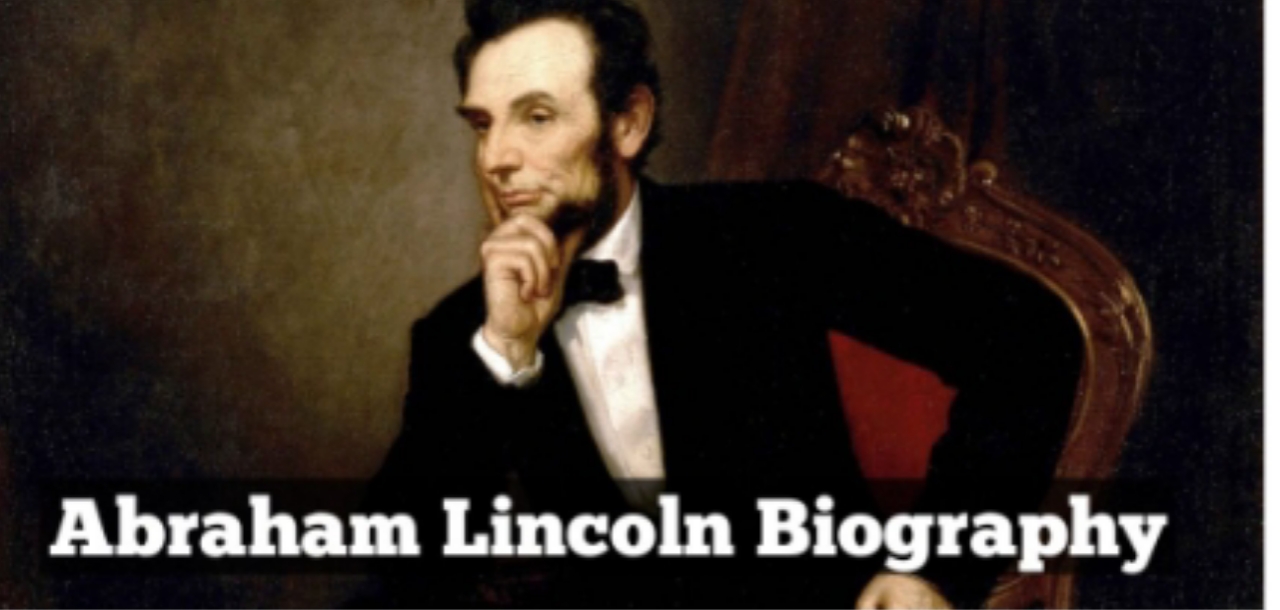

Abraham Lincoln, the 16th President of the United States, stands as perhaps the most transformative figure in American history. Born on February 12, 1809, in a one-room log cabin in Hardin County, Kentucky, his journey from a frontier laborer to the savior of the Union is a quintessential narrative of resilience, intellectual growth, and moral evolution. His presidency, defined by the crucible of the American Civil War, reshaped the nation’s legal, social, and moral fabric.
The Frontier Origins
Lincoln’s early life was marked by hardship and loss. His mother, Nancy Hanks Lincoln, died when he was only nine years old. Despite a strained relationship with his father, Thomas Lincoln, and having less than a year of formal schooling, Abraham possessed an insatiable hunger for knowledge. He famously walked miles to borrow books, reading by the flickering light of a fireplace. This self-education laid the foundation for his legendary mastery of the English language and his sharp, analytical mind.
In 1831, Lincoln moved to New Salem, Illinois. It was here that he transitioned from manual labor—splitting rails and working on flatboats—to professional life. After a failed attempt at running a general store, he turned to law and politics. He taught himself law by reading Blackstone’s Commentaries and was admitted to the Illinois bar in 1836.
The Rise to National Prominence
Lincoln’s political career began in the Illinois State Legislature, where he served four terms. He later served a single term in the U.S. House of Representatives (1847–1849), where he was a vocal critic of the Mexican-American War. However, it was the issue of slavery that truly ignited his national profile.
The Kansas-Nebraska Act of 1854, which allowed for the potential expansion of slavery into new territories, brought Lincoln back into the political fray. He joined the newly formed Republican Party and, in 1858, challenged Stephen A. Douglas for a seat in the U.S. Senate. Although Lincoln lost the election, the Lincoln-Douglas Debates showcased his moral clarity. His “House Divided” speech famously predicted that a government could not endure permanently “half slave and half free.”
The Presidency and the Civil War
In 1860, Lincoln won the presidency in a fractured four-way race. His victory triggered the secession of Southern states, leading to the outbreak of the Civil War in April 1861. As Commander-in-Chief, Lincoln faced the monumental task of preserving a crumbling Union while navigating intense political pressure from both radical abolitionists and conservative Democrats.
Lincoln proved to be a masterful strategist. He balanced his cabinet with political rivals—a “Team of Rivals”—to ensure diverse perspectives. His primary objective was the preservation of the Union, but he soon realized that the Union could not be saved without addressing the root cause of the conflict: slavery.
On January 1, 1863, he issued the Emancipation Proclamation. While it only freed slaves in Confederate-held territories, it fundamentally changed the purpose of the war from a struggle for territory to a crusade for human liberty. Later that year, at the dedication of the military cemetery in Gettysburg, he delivered the Gettysburg Address. In just 272 words, he redefined the American identity, asserting that the nation was “conceived in Liberty, and dedicated to the proposition that all men are created equal.”
Victory and Martyrdom
Lincoln’s leadership culminated in the passage of the 13th Amendment, which constitutionally abolished slavery. In April 1865, as the war drew to a close with the surrender of General Robert E. Lee, Lincoln began planning for a compassionate “Reconstruction” of the South. His Second Inaugural Address—noted for the phrase “with malice toward none, with charity for all”—sought to heal the nation’s wounds.
However, his vision for peace was cut short. On April 14, 1865, while attending a play at Ford’s Theatre in Washington, D.C., Lincoln was assassinated by John Wilkes Booth, a Confederate sympathizer. His death plunged the nation into mourning and turned him into a martyr for freedom.
Legacy and Impact
Abraham Lincoln’s legacy is multifaceted. He is credited with:
- Preserving the Union: Preventing the permanent fracture of the United States.
- Ending Slavery: Moving the nation toward the fulfillment of its founding ideals.
- Strengthening the Federal Government: Centralizing power to manage the war and the economy.
Today, Lincoln remains a symbol of integrity and perseverance. His life demonstrates that a leader’s greatest strength lies in their ability to listen, adapt, and remain anchored to a moral compass even in the darkest of times. He did not just lead a nation through a war; he gave it a new birth of freedom.
1. Abraham Lincoln American Academy (ALAA)
While Abraham Lincoln himself did not attend an academy (he was largely self-taught), several prestigious institutions bear his name today. The most prominent modern namesake is the Abraham Lincoln American Academy, an international school with campuses in Abuja and Lagos, Nigeria.
- Curriculum: It follows an American academic system, serving students from preschool through middle school (Grades 6–8).
- Pillars: The school is built on four core values: Intellect, Excellence, Creativity, and Global Connections.
- Focus: It emphasizes technology, AI integration, and character leadership, preparing students for success in a globalized world.
2. A Diverse Career Path
Before becoming the 16th President, Lincoln held a variety of jobs that shaped his “Honest Abe” persona:
- Manual Laborer: Famous as a “Rail-splitter,” he worked on farms and flatboats.
- Storekeeper: He co-owned a general store in New Salem, Illinois, which eventually “winked out” (failed), leaving him with debt he spent years paying back.
- Postmaster & Surveyor: These roles helped him network and gain the trust of his community.
- Military Service: He served as a captain in the Black Hawk War (1832), though he never saw combat.
- Lawyer: A self-taught attorney, he became one of Illinois’ most successful trial lawyers, known for his logic and integrity.
- Politician: He served four terms in the Illinois Legislature and one term in the U.S. Congress before winning the Presidency in 1860.
3. The Death of a President
Abraham Lincoln was the first U.S. President to be assassinated.
- The Date: April 14, 1865 (Good Friday).
- The Setting: Ford’s Theatre in Washington, D.C., during a performance of the comedy Our American Cousin.
- The Assassin: John Wilkes Booth, a famous actor and Confederate sympathizer, shot Lincoln in the back of the head.
- Final Moments: Lincoln was carried to the Petersen House across the street. He remained in a coma for nine hours and passed away at 7:22 a.m. on April 15, 1865.
- Legacy of the Death: His passing turned him into a national martyr, occurring just days after the Confederate surrender at Appomattox.
4. Iconic Quotes
Lincoln was a master of the English language. Here are some of his most enduring reflections:
On Perseverance: “I am a slow walker, but I never walk back.”
On Integrity: “Character is like a tree and reputation like its shadow. The shadow is what we think of it; the tree is the real thing.”
On Democracy: “Government of the people, by the people, for the people, shall not perish from the earth.” (From the Gettysburg Address)
On Strategy: “Give me six hours to chop down a tree and I will spend the first four sharpening the ax.”
On Humanity: “With malice toward none, with charity for all… let us strive on to finish the work we are in.” (From his Second Inaugural Address)

Leave a Reply