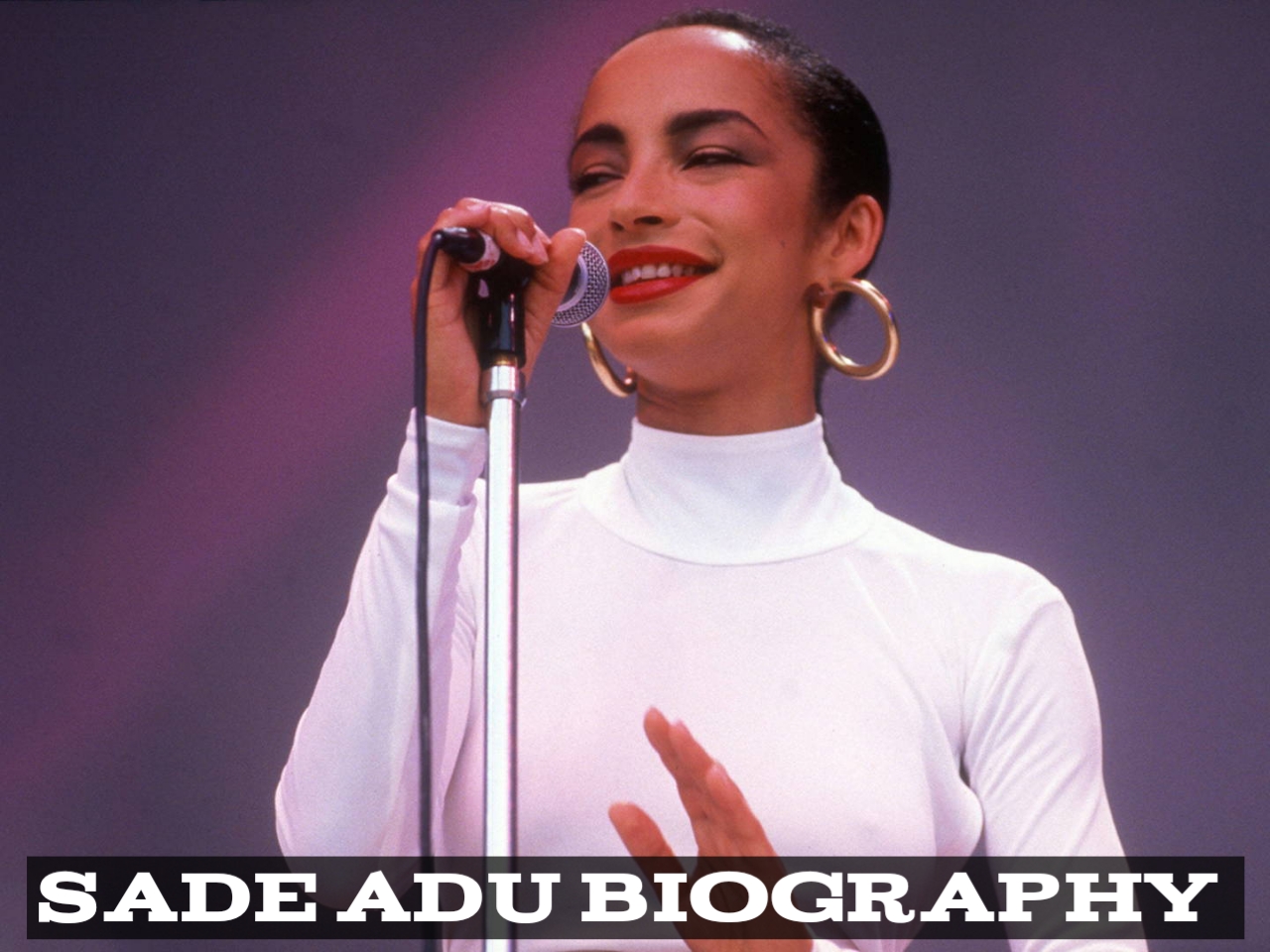
Born Helen Folasade Adu on January 16, 1959, in Ibadan, Nigeria, the woman the world knows simply as Sade represents far more than just a voice. She is an archetype of sophisticated cool, a pioneer of the “quiet storm” aesthetic, and a masterclass in artistic restraint. Her journey from the vibrant streets of West Africa to the rainy suburbs of Essex, and eventually to the pinnacle of global stardom, is a testament to the power of authenticity over artifice.
Early Life and Cultural Fusion
Sade’s story begins with a cross-cultural union: her father, Adebisi Adu, was a Nigerian lecturer in economics, and her mother, Anne Hayes, was an English district nurse. When the couple separated, four-year-old Sade moved to England with her mother and brother. Settling in Colchester, Essex, she grew up immersed in the diverse sounds of the 1960s and 70s.
ALSO SEE: BLAKE SHELTON BIOGRAPHY
While she developed a deep appreciation for soul legends like Curtis Mayfield, Donny Hathaway, and Bill Withers, her initial ambitions weren’t in music. Sade was drawn to the visual arts, eventually moving to London to study fashion design at the prestigious Saint Martin’s School of Art. It was during these formative years in the London club scene that her destiny began to shift from the sketchbook to the microphone.
The Emergence of the Icon
Sade’s entry into music was almost accidental. She began as a backup singer for the Latin funk band Pride. It was during these live sets that her unique, smoky contralto began to captivate audiences. Her performance of a specific track she co-wrote, “Smooth Operator,” started attracting the attention of record labels.
By 1983, Sade signed with Portrait Records (later part of Epic) and formed her namesake band with three former Pride members: Stuart Matthewman, Andrew Hale, and Paul S. Denman. This distinction is vital—Sade is a band, not just a solo artist, though Adu’s name and image have always been its undeniable heartbeat.
Global Conquest and the “Sade” Sound
In 1984, the band released their debut album, Diamond Life. It was a seismic event in the music industry. In an era dominated by neon colors and high-energy synth-pop, Sade offered something radically different: minimalism, jazz-inflected melodies, and lyrics about longing and urban life.
The success was staggering:
- Diamond Life became one of the best-selling debut albums of the decade.
- The band won the Grammy Award for Best New Artist in 1986.
- Subsequent albums, Promise (1985) and Stronger Than Pride (1988), cemented her status as a global phenomenon.
Sade’s music was characterized by a specific atmosphere—cool, detached, yet deeply emotional. She didn’t scream to be heard; she whispered, and the world leaned in to listen.
ALSO SEE: FUNKE AKINDELE BIOGRAPHY
The Power of Absence
One of the most remarkable aspects of Sade Adu’s biography is her relationship with fame. Unlike many of her contemporaries, she never sought the spotlight for its own sake. She famously values her privacy, often disappearing for a decade or more between projects.
This “mystique” wasn’t a marketing ploy; it was a necessity for her creative process. She once famously said, “I only make records when I feel I have something to say.” This resulted in long hiatuses before the release of Love Deluxe (1992), Lovers Rock (2000), and Soldier of Love (2010). Each return was met with critical acclaim and commercial success, proving that her audience was willing to wait for her particular brand of perfection.
Legacy and Personal Life
Beyond the stage, Sade’s life has been defined by a quiet dignity. She was briefly married to Spanish filmmaker Carlos Scola Pliego and later had a long-term relationship with music producer Bob Morgan, with whom she has a child, Izaak Theo Adu. Her support for Izaak’s transition as a transgender man in later years highlighted her role as a compassionate and private family woman.
Today, Sade Adu’s influence is visible everywhere. From the vocal styles of modern R&B stars to the minimalist aesthetics of high fashion, her “less is more” philosophy remains relevant. She has sold over 75 million records worldwide, yet she remains one of the most elusive figures in pop history.
Sade didn’t just give the world songs; she gave the world a mood. Her biography is not one of tabloid scandals or frantic reinventions, but of a woman who maintained absolute control over her art and her identity, proving that true elegance never goes out of style.
Personal Details
- Age: As of March 2026, Sade Adu is 67 years old. She was born on January 16, 1959.
- Net Worth: Her estimated net worth is approximately $40 million to $60 million. This wealth has been built through her massive global album sales (over 75 million units), lucrative world tours, and her notoriously private but steady career.
Family Background
- Father: Adebisi Adu, a Nigerian economics lecturer of Yoruba descent. He met Sade’s mother in London during the 1950s.
- Mother: Anne Hayes, an English district nurse. After the couple separated when Sade was four, Anne raised Sade and her brother in Essex, England.
- Siblings: She has an older brother named Banji Adu.
Essential Songs
ALSO SEE: CHUCK NORRIS BIOGRAPHY
Sade is known for a “less is more” approach, producing hits that have remained timeless across decades. Key tracks include:
| Title | Album | Year |
|---|---|---|
| “Smooth Operator” | Diamond Life | 1984 |
| “Your Love Is King” | Diamond Life | 1984 |
| “The Sweetest Taboo” | Promise | 1985 |
| “Paradise” | Stronger Than Pride | 1988 |
| “No Ordinary Love” | Love Deluxe | 1992 |
| “By Your Side” | Lovers Rock | 2000 |
| “Soldier of Love” | Soldier of Love | 2010 |
